محدوده اسیدیته خاکها
Soils support a number of inorganic and organic chemical reactions. Many of these reactions are dependent on some particular soil chemical properties. One of the most important chemical properties influencing reactions in a soil is pH (Figure 10t-2). Soil pH is primarily controlled by the concentration of free hydrogen ions in the soil matrix. Soils with a relatively large concentration of hydrogen ions tend to be acidic. Alkaline soils have a relatively low concentration of hydrogen ions. Hydrogen ions are made available to the soil matrix by the dissociation of water, by the activity of plant roots, and by many chemical weathering reactions.
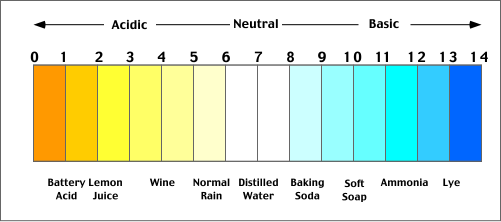
| Figure 10t-2: The pH scale. A value of 7.0 is considered neutral. Values higher than 7.0 are increasingly alkaline or basic. Values lower than 7.0 are increasingly acidic. The illustration above also describes the pH of some common substances. |
+ نوشته شده در ساعت 9:59 توسط صادقی 09376716100
|